
Two Questions for Republicans
Posted: September 6, 2012 Filed under: Law, Politics Leave a comment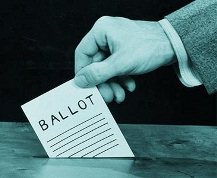 My questions are catalyzed by Bill Clinton’s convention remarks about voter suppression and reaction to it. This is not a topic Clinton dwelled on, but he did say this:
If you want every American to vote and you think it’s wrong to change voting procedures just to reduce the turnout of younger, poorer, minority and disabled voters, you should support Barack Obama.
Responding over at National Review Online the next morning, veteran conservative pundit John Fund accused Clinton of “shamelessly playing the race card” with criticism that qualifies as “reckless and irresponsible.” Fund was especially galled by Clinton’s timing:
His timing in attacking efforts to combat voter fraud couldn’t have come at a more ironic time. Just yesterday, a Democratic state legislator in Clinton’s native Arkansas pled guilty along with his father, a West Memphis police officer, and a West Memphis city councilman to a conspiracy to commit voter fraud. Democratic representative Hudson Hallum was part of a conspiracy to bribe voters in three separate elections in 2011.
A quick read through the U.S. Attorney’s news release (pdf) announcing the charges and guilty pleas reveals some serious warp in Fund’s sense of irony. The charges were hardly the kind of imagined voter fraud that the recent spate of laws is supposed to combat in order to preserve the republic. These clowns in Arkansas helped absentee voters obtain and complete ballots, bribed them with food and hooch, collected the ballots in unsealed envelopes, looked at them, and then sealed and mailed only those who voted for Rep. Hallum. In other words, much that is felonious, but nothing that voter ID requirements or curtailed voting hours would halt.
So here are my two question for thoughtful GOPers:
First, when a venerable commentator like John Fund has to rely on a transparently irrelevant example of election fraud in order to justify these new laws, does that not reveal for all to see, as opponents of these laws have been claiming all along, that this is a solution in search of a (non-existent) problem?
And second, when Bill Clinton suggests that Republicans are tinkering with voting laws in a specifically calculated effort to “reduce the turnout of younger, poorer, minority and disabled voters,” can you honestly look yourself in the mirror and assert with genuine conviction that this is not precisely the intent (not just the effect, but the intent) of those pushing these laws?
A version of this post appears on the Nashville Scene‘s Pith in the Wind blog.
Compelled Speech at Work
Posted: August 29, 2012 Filed under: Corporations, Free Speech 1 Comment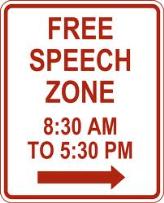 Quick quiz: What’s worse than a company that compels its workers to engage in expressive political activity? Answer: When it forces workers do that and docks their pay at the same time.
Such is the circumstance experienced by a group of Ohio coal miners, who say they were pressured by their employer to attend a Mitt Romney event on Aug. 14. This came to light Monday when employees who feared they’d lose their jobs complained to a radio talk show host. That host then discussed it with Murray Energy’s CFO Rob Moore, who offered one of the great one-sentence bits of doublespeak uttered in recent memory. According to Moore, company managers “communicated to our workforce that the attendance at the Romney event was mandatory, but no one was forced to attend.” The mine was shut down for security reasons, so workers were not paid for the day.
Moore, with no shortage of presumption and no hint of irony, also told the radio station that the Romney rally was “an event that was in the best interest of anyone that’s related to the coal industry in this area or the entire country.” The man may have overstepped his bounds a bit, given that later Monday a company spokesman commented that “no employees were forced to attend the Romney event,” adding that participation was “completely voluntary.”
Murray Energy’s executives are big contributors to the GOP, and CEO Bob Murray is said to be a serious climate change denialist. The firm’s leaders certainly have every right to believe what they want and to write campaign checks to whomever they want. Sadly, in our very timid system of legal protections for the expressive rights of private sector workers, they also have the ability to coerce their workers into political submission. Saying after the fact that participation was “voluntary” scarcely dilutes the fear employees no doubt perceived about the true nature of that “voluntary” opportunity.
The Cleveland Plain Dealer reports that the Romney campaign did not respond to a request for comment. There’s a shocker.
The Free Speech Police: University Edition
Posted: August 27, 2012 Filed under: Education, Free Speech Leave a comment On Inside Higher Ed today, a story about universities that seek to regulate social media use by student athletes. Some programs require athletes as a condition of participation to use monitoring software that alerts school officials when untoward thoughts become untoward posts and tweets. The lesson that university athletics departments apparently want to impart to their young charges is that freedom of expression might be a lovely concept, but not for you.
According to a report in the Courier-Journal, the University of Louisville uses software to flag over 400 words and phrases in posts and tweets, mostly having to do with substance use and sex. Most of the phrases flagged by the University of Kentucky’s version of the software are sports agents’ names. They do this monitoring with a product such as UDiligence, which searches social network profiles and posts (Facebook, Twitter, MySpace, and YouTube) for “for profanity, racial slurs, sexual connotations, and mentions of weapons, drugs and alcohol” as well as any custom keywords provided by a given school’s athletic department. Although the software doesn’t necessarily require athletes to hand over their social media account passwords, it does require that they grant access. If this seems like it might be just a wee bit of an infringement on student athletes’ freedom of expression, that’s because it is.
The recent development on this is movement in some states to bar colleges and universities from requiring that student athletes share access to their social media accounts as a condition of participation in sports. The latest is a bill passed last week by the California legislature and awaiting the governor’s signature. The measure defines social media content broadly to include “videos or still photographs, blogs, video blogs, podcasts, instant and text messages, email, online services or accounts, or Internet Web site profiles or locations.” It prohibits any public or private educational institution from requiring that any student or prospective student…
(1) Disclose a user name or password for accessing personal social media.
(2) Access personal social media in the presence of the institution’s employee or representative.
(3) Divulge any personal social media information.
The California bill bars these schools from disciplining, suspending, expelling, or threatening same for refusing to comply with a request for social media account access or information. Sounds like an excellent approach.
Through a Freedom of Information request, the Courier-Journal reviewed hundreds of pages of flagged posts by athletes at the University of Kentucky, finding some tweets that clearly would reflect poorly on the school’s athletic program (I have some OxyContin. It will make you feel good. #drugs) but others caught in the inevitably clumsy trap of a imprecise keyword search (God is the only one who can heal me, help me & fight for me, flagged because of the word “fight”).
No one doubts that student athletes, like others kids that age, will say dumb things from time to time that the university might reasonably wish they hadn’t said. Social media broadcasts those lapses of judgment to a wider audience. But as Ken Paulson of the First Amendment Center in Nashville points out,
Coaches who impose blanket bans or chill players’ speech by watching everything they post are not doing their athletes any favors. The handful of athletes who go on to professional sports will have to deal with social media throughout their careers, and they won’t learn anything if they’re not given any latitude. The best approach is to give student-athletes the education they need to enter the workplace and to become well-rounded citizens. That includes the smart and responsible use of social media. There’s no better place to learn those lessons than in America’s high schools and colleges.
Well said.
A version of this post appears on the Nashville Scene‘s Pith in the Wind blog.
Campaign Consciousness and Governing Consciousness
Posted: August 24, 2012 Filed under: Politics 2 Comments I usually find Times columnist David Brooks’ faux-moderate conservativism to be more insipid than enlightening, but today’s column offers a trenchant (and perhaps even original) insight into what’s wrong with our campaign-driven politics. Noting that in Congress, Paul Ryan repeatedly shows himself unwilling to accept half-measures or compromise on fiscal matters or entitlements, Brooks accuses Ryan of choosing “political fantasy” over significant progress:
Ryan was betting that three things would happen. First, he was betting that Republicans would beat President Obama. Second, he was betting that Republicans would win such overwhelming Congressional majorities that they would be able to push through measures Democrats hate. Third, he was betting that a group of Republican politicians would unilaterally slash one of the country’s most popular programs and that they would be able to sustain these cuts through the ensuing elections, in the face of ferocious and highly popular Democratic opposition …. Ryan’s fantasy happens to be the No. 1 political fantasy in America today, which has inebriated both parties. It is the fantasy that the other party will not exist. It is the fantasy that you are about to win a 1932-style victory that will render your opponents powerless.
The piece goes on to fashion a duality between “campaign consciousness” — the strident policy argument vibe one cultivates before an election — and “governing consciousness” — the mindset between election seasons that leads office holders to “navigate our divides to come up with something suboptimal but productive.” Brooks tags Ryan as good on the former but lousy on the latter.
Although Brooks confines his accusation to Ryan, influential figures in both parties exhibit this tendency, feeding the paralyzing gridlock that prevents anything from getting done in Congress even when it’s not campaign season. Brooks is right that way too much of the campaign discourse we endure rests on an absurdist assumption that winning the electoral college will magically activate a governing mandate. As if.
But even if there are Democrats mirroring Ryan’s behavior, it can also be said that Barack Obama has (suffers from?) the opposite profile — too much governing consciousness (an inclination to capitulate for marginal gain) and too little campaign consciousness. As Thomas Frank argues in an essay getting a lot of attention, overeager conciliation undermines your negotiating leverage, inviting the very rigidity on the other side that ends up undermining your conciliatory move.
A version of this post appears on the Nashville Scene‘s Pith in the Wind blog.
Institutions and Ethics: Emory Shows Us How It’s (Not) Done
Posted: August 20, 2012 Filed under: Education, Ethics Leave a comment It would be hard to invent a better (or should I say worse) example of how institutional forces stifle ethical behavior than the reports on how Emory University has been reporting false admissions statistics for years. The university on Friday revealed the findings of its own three-month investigation:
The investigation revealed that both the University’s Office of Admission serving Emory College, and the University’s Office of Institutional Research, annually reported admitted students’ SAT/ACT scores to external surveys as enrolled student scores, since at least the year 2000. This had the effect of overstating Emory’s reported test scores. The report found that class rankings were also overstated, although the methodology used to produce the data was not clear.
And as the education industry site Inside Higher Ed reports, the misreporting was systemic and widely known within the university:
“We gleaned from the little we know that in these offices were a number of individuals who respected the lines of authority who were told by supervisors ‘This is the way we did it,’” said Provost Earl Lewis on a conference call with reporters. “That was noted and they went on with day-to-day business.” …. the practice spanned the tenures of at least two admissions deans and also involved the university’s director of institutional research. Staff members in those offices were also aware that the practice was taking place.
This is classic behavior in ethically challenged organizations: people in charge telling suspicious underlings that they shouldn’t worry their pretty little heads about actions they think don’t smell right because that’s how we do things around here. For its part Emory now seems fairly contrite, to judge by the university president’s public statement last week:
As an institution that challenges itself, in the words of our vision statement, to be “ethically engaged,” Emory has not been well served by representatives of the university in this history of misreporting. I am deeply disappointed.
Of course, contrite is one thing, and forthcoming is another. You might think that an institution renewing its dedication to being “ethically engaged” would have some mention of this scandal and a link to the university’s response on its home page. You’d be wrong.
A Debate Debate in a Tennessee Congressional District
Posted: August 15, 2012 Filed under: Politics Leave a comment In Tennessee’s 4th Congressional District, incumbent Republican Rep. Scott DesJarlais is refusing to debate his Democratic opponent Eric Stewart on the (ostensible) grounds that Stewart isn’t running enough of an issues campaign to justify meeting on the same stage. DesJarlais’ campaign manager had this to say:
“Eric has yet to release a meaningful platform of any sort, even on his own website, and has placed the debate cart before the platform horse. We simply challenged him to actually articulate where he stands on key issues like taxes, energy, spending, the definition of marriage, and who he will be voting for in the presidential election.”
For an office holder with the advantage of incumbency, a large campaign finance edge and a reputation for articulateness that falls somewhere short of Aristotelian, ducking debates is hardly a novel or startling strategic move. Justifying the dodge as a response to an opponent’s supposedly thin platform is, I suppose, as good a way as any to avoid saying “I don’t want to debate him because it will only hurt me and I can win without doing it so piss off.”
Even so, the DesJarlais spokesman’s “even on his own website” charge is sufficiently concrete that it invites a little followup. Is it the case that Stewart fails to articulate positions on fundamental issues? The short answer is that the DesJarlais campaign claim is pretty much valid.
On the issues Stewart’s website is sketchy and shallow. It has only two issue categories. The first, on jobs and the economy, makes a few vague statements about business tax credits, overseas hiring by government contractors, ending “tax breaks to billionaires and big corporations” and rebuilding infrastructure, but offers no specific ideas or proposals. The other category, Social Security and Medicare, does assert that Stewart will “fight against any effort to privatize Social Security and work to defeat any legislation that tries to turn Medicare into a voucher program,” which does qualify as an issue-oriented pledge to oppose aspects of the so-called Ryan plan.
To be fair, DesJarlais’ website isn’t much more detailed, although it does cover more issues with its own half-baked pablum (healthcare, energy, immigration, abortion, marriage rights, the second amendment), and of course DesJarlais has a voting record in Congress, such as it is.
But is this unfair to Stewart? Do challengers commonly run issue-free campaigns, focusing exclusively on their incumbent-opponents’ records? For perspective I picked out a contested race with a similar dynamic: a serious Democratic challenger facing a freshman Republican incumbent. In Illinois’ 8th Congressional District, Republican Rep. Joe Walsh faces a challenge from Democrat Tammy Duckworth in a closely watched contest. And frankly, the issues page of the Duckworth campaign website makes Eric Stewart’s look minimalist in comparison. Duckworth offers separate pages with policy statements not just on the economy and entitlement programs as Stewart does, but also on fiscal policy, education, energy, national defense, Afghanistan, Israel, civil rights (including women’s rights and workers’ rights), and veteran’s issues. And her statements on most of these issues are quite specific — identifying concrete priorities, and naming bills and programs she supports and opposes.
Stewart doesn’t help himself with this response to the incumbent’s debate avoidance: “Scott DesJarlais wants to talk about votes I might cast in the future. I want to talk about votes he’s cast in the past.” Yes, we get it, you are trying to unseat an incumbent by directing voter attention to his views and votes — that’s the challenger’s task. But to suggest that “votes I might cast in the future” are somehow a distraction from the real business of a political campaign is daft.
None of this is to excuse DesJarlais’ lame efforts to avoid debates. There is no good reason to not debate a legitimate major party opponent. But his stated reason for the dodge — that his opponent has yet to articulate serious positions on many issues — does appear to have some truth to it. Of course, that’s precisely a reason to have a debate, not a justification for avoiding one.
A version of this post appears on the Nashville Scene‘s Pith in the Wind blog.
Facebook “Likes” and Free Speech
Posted: August 14, 2012 Filed under: Free Speech, Law Leave a comment When I told a CNN reporter last week that surely, the Virginia case of a sheriff’s deputy fired for “liking” his boss’s opponent will be overturned on appeal, it didn’t occur to me that any reputable constitutional scholars would make a case to the contrary. But surprisingly, according to a story Monday in the Hampton Roads, Virginia Daily Press, First Amendment expert Robert M. O’Neil at the University of Virginia thinks the lower court ruling dismissing the deputy’s case could stand. Here’s how the Daily Press reported O’Neil’s comments:
O’Neil said he didn’t agree with Jackson when the judge seemed to indicate that “actual statements” were needed for something to qualify as free speech. But he said he agreed that more evidence is “crucial” to determine if someone was expressing a view by hitting the “Like” button.
“I am not sure that I would recognize that hitting the ‘Like’ button is an expression,” said O’Neil, who said he’s typically a strong supporter of the ACLU and free speech.
“Judge Jackson I think is correct,” he said. “‘Liking’ something isn’t sufficiently expressive, not by itself. There should some credible evidence of like or dislike that would create a context. I would expect evidence of intent, some context …more than simply pushing the ‘Like’ button.”
O’Neil said it was hard to know what the Court of Appeals would do, but he predicted that if the case ever got to the U.S. Supreme Court, “it would affirm Judge Jackson’s view” in some fashion.
O’Neil is no slouch — he’s a law professor emeritus at UVa, a former president of the university, and a former director of the Thomas Jefferson Center for the Protection of Free Expression. In a case where virtually every legal expert who has weighed in with an expectation that the District Court decision to dismiss will not stand, O’Neil’s input is a surprising reminder that there are two sides to any case. (But surely he’s wrong nonetheless!)


 BruceBarry.net