
Is Moderation a Disability?
Posted: December 7, 2012 Filed under: Politics Leave a comment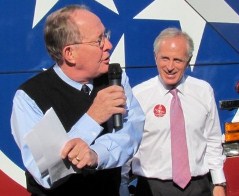 In the sea of deep angry red that is Tennessee politics these days, a desperate thirst for moderation continues to distort coverage of some of our elected representatives. And so it is that The Tennessean paints positions taken by Sens. Bob Corker and Lamar Alexander on fiscal cliff negotiations as striking a more flexible pose than some of their GOP brethren:
While other Middle Tennessee Republicans in Congress expressly oppose raising tax rates as part of any solution to the looming “fiscal cliff,” the state’s two GOP senators appear to be leaving negotiating room. When asked specifically this week if they would rule out increasing tax rates for those making $250,000 and above — rather than just modifying deductions and exemptions — Sens. Lamar Alexander and Bob Corker stopped short of such a declaration.
Alexander says he’s “waiting for the president to do his job, which is to recommend a specific plan to restrain entitlement spending.” Corker echoes: “Until the discussion moves to entitlement reform, especially Medicare, it’s not a serious conversation.”
Earth to Bob and Lamar: Insisting that significant entitlement reform accompany the fiscal adjustments needed to avert the so-called cliff isn’t reasonable or moderate; it’s an alternative route to the great state of delusion. With just three and a half pre-cliff weeks on the calendar, the labyrinthine policy webs of Medicare and Medicaid are not going to be seriously pondered, much less reformed. The cliff is an unsavory and ill-advised combination of mandatory tax hikes and spending cuts, and the 24-day solution is to adjust tax hikes and spending cuts. Making high-minded but utterly meaningless demands for broad entitlement reform, as Corker and Alexander are, is no less a form of taxpayer hostage-taking than the rabid refusal of their mouth-foamier GOP colleagues who refuse to even consider letting Obama fulfill his campaign promise to raise top marginal rates.
Alexander and Corker did have a chance to show off some genuine moderation earlier in the week when the Senate failed to ratify an international treaty protecting the rights of people with disabilities. Eight Republicans found the microscopic quantity of backbone necessary to defy their right-wing overlords and cast a vote in favor of ratification. Alexander and Corker both voted against. In a stunning display of conviction, Roll Call reported, Alexander “would not say whether he supported the treaty, merely noting that the timing of the vote was bad.”
Moderation is one thing, sedation entirely another.
A version of this post appears on the Nashville Scene‘s Pith in the Wind blog.
Break Promises, Win Friends
Posted: November 27, 2012 Filed under: Media Leave a comment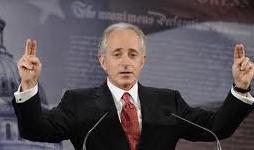
“Hey, it was just a quote-pledge-unquote, so chill.”
Just so that nobody is confused about whether the Americans for Tax Reform pledge really does look like a promise, here is the full text of the thing that Corker signed:
I, ___, pledge to the taxpayers of the state of ___, and to the American people that I will: one, oppose any and all efforts to increase the marginal income tax rates for individuals and/or businesses; and two, oppose any net reduction or elimination of deductions and credits, unless matched dollar for dollar by further reducing tax rates.
The Tennessean writes that “Norquist’s pledge has been a major stumbling block to Congress serving its constituents, preventing any real discussion about reasonable compromises that would get the nation’s economy back on track.” Puh-leeze. Norquist’s pledge has not been the stumbling block; the craven and dogmatic act of signing the damn thing by political cowards like Corker is the stumbling block. In its Romney endorsement, the paper was critical of Barack Obama’s “inability to possess the leadership to break the partisan gridlock in Congress.” Gee, do you think brainless pledges like Corker’s might have had anything to do with that?
Let’s see if we have this straight, Senator: As a candidate for office you make an inane (yet solemn) promise to never ever ever do something, and then you abandon it on a dime six years later when you suddenly wake up to the painfully obvious idiocy of making such a promise in the first place. Are we supposed to call this statesmanship?
A version of this post appears on the Nashville Scene‘s Pith in the Wind blog.
Play the GOP Blame Game
Posted: November 15, 2012 Filed under: Politics Leave a commentWith the election now more than a week in the rear-view mirror, the unhinged voices of GOP apocalypse (none more paroxysmic than this one) that dominated in the first few days have given way to more sober post-mortems offered up by allegedly rational adults. Let’s take a look.
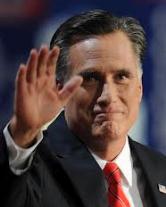 First up is Mitt Romney, who on a conference call with donors and fund-raisers Wednesday blamed his defeat on Barack Obama’s inclination for bestowing policy “gifts” on key constituencies:
With regards to the young people, for instance, a forgiveness of college loan interest was a big gift. Free contraceptives were very big with young, college-aged women. And then, finally, Obamacare also made a difference for them, because as you know, anybody now 26 years of age and younger was now going to be part of their parents’ plan, and that was a big gift to young people. They turned out in large numbers, a larger share in this election even than in 2008 ….You can imagine for somebody making $25,000 or $30,000 or $35,000 a year, being told you’re now going to get free health care, particularly if you don’t have it, getting free health care worth, what, $10,000 per family, in perpetuity — I mean, this is huge …. Likewise with Hispanic voters, free health care was a big plus.
Mostly what this illustrates is that the Mitt Romney who failed to win office is just as clueless and self-unaware as the Mitt Romney who ran for office. (Several Republicans apparently agree.) Public policies that people perceive make their lives better are “big gifts”? Does he really think that single women concerned with issues of health and family planning went blue for contraceptive freebies rather than because Mitt and company vowed to defund Planned Parenthood and give employers control of contraceptive options in health care? Is he really under the illusion that making health insurance more accessible for tens of millions of uninsured Americans is the moral or economic equivalent of giving people a gift of “free health care … in perpetuity”?
 Next up is Paul Ryan, who earlier this week blamed it on cities: “The surprise was some of the turnout, some of the turnout especially in urban areas, which gave President Obama the big margin to win this race.”
Translation: “Black and brown people voted. What the hell?” Dude, you lost Iowa.
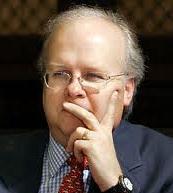
Lastly there’s “the architect,” Karl Rove (and you can’t spell architect without “arch”). Did you know that Rove’s birthday is Dec. 25 and his middle name is Christian? Be that as it may, in an op-ed in today’s Wall Street Journal Rove fires up some post-game pablum:
Strategically, Republicans will need to frame economic issues to better resonate with middle-class families. Mr. Romney had solid views on jobs, spending, deficits, health care and energy. But even among the 59% of voters for whom the economy was their top concern, he prevailed by only four points …. One reason the GOP didn’t do better with its pro-growth agenda was that Mr. Romney’s character and record were undermined by early, relentless personal attacks that went largely unanswered.
 Yeah, that’s right, Karl, it was all a matter of framing; an economic plan built on fantasy arithmetic, an approach to health insurance that celebrates the magic of primary care in emergency rooms, and an energy strategy built on oil and coal forever had nothing to do with it.
Republicans need not jettison their principles. But they must avoid appearing judgmental and callous on social issues. Offensive comments about rape by GOP Senate candidates in Missouri and Indiana gave the media an excuse to put social issues at the election’s center in a way that badly hurt the entire party, as well as costing Republicans two Senate seats.
The problem is not that a few offensive comments gave the media an excuse to put these issues front and center; it’s that Romney and Ryan wouldn’t and couldn’t successfully distance themselves and their party from this callousness. It wasn’t some rogue rape-obsessed Senate candidate who was dumb enough to define workplace gender equality as making sure women can get home early and cook dinner.
The GOP must reduce the destructiveness of the presidential primaries. In the first place, activists can withhold support from candidates who make reckless assaults on competitors, which happened too often this time. Also, the Republican National Committee should limit the number of debates and, by showing wisdom in picking debate moderators, limit the media’s ability to depict the party as a fringe group.
Yes, when all else fails, blame the media. Hate to break it to you, Karl, but the GOP made itself look like a fringe group all by itself; the press merely reported the story that we all saw unfolding. Given the rhetorical mood and tenor of the primary season “talent” on offer, fewer debates wouldn’t have suppressed the crazy, they just would have evinced it more quickly and efficiently.
A version of this post appears on the Nashville Scene‘s Pith in the Wind blog.
Awesomest Op-Ed Ever
Posted: November 12, 2012 Filed under: Media 1 Comment How is it that the cultural and political vibe here in a red state like Tennessee diverges so dramatically from so much of the rest of the country? Fortunately we have Nashville’s daily paper The Tennessean to help us sort through it: we live in a place where the editors of the daily paper think their editorial page is just the spot for the paranoid delusions of a right-winger like Andy Miller.
In Miller’s world, channeled in a Tennessean op-ed this morning, Barack Obama is a man with a “socialist mission” who has “turned his back on our allies and encouraged the growth of radical Islam all over the world.” One could just dismiss this as boilerplate far right prattle, but it’s the kind you expect to find on Michelle Malkin’s comment board; even in flyover America there are very few editors who would so debase themselves professionally as to put this kind of thing on the editorial page of a metropolitan daily. That fact that it ran may say more about The Tennessean than it does about Mr. Miller.
The thing truly runs off the rails when Miller launches his diatribe about the evils of cities and the scum who fill them:
In looking at the electoral map, it is clear that the states themselves are not the key element. The blue areas are counties with big cities filled with elitist intellectuals and government-dependent millions tightly packed into ever-declining neighborhoods ….These cities are the repositories of big government, poverty, massive dependency and cobbled-together constituencies who often have little in common except that they are part of the Democratic Party. They vote lock-step with the people who promise continued goodies and continued protection from the “evil rich.”
Miller’s urban animus is rooted in fully formed ignorance: he describes the counties within which cities are situated as places that “will always be blue in the new America and will always have their hand out to the red sections looking for more and more.” The opposite, as just about everyone except Miller and the editors of The Tennessean knows, is the case. As you can see in this chart and the map within this article (original data here), red states are more likely to get bigger cuts in federal spending, while blue states, containing most of the cities that Miller so abhors, are much more likely to be doing the giving, not the taking.
So Mr. Miller, a suggestion: The next time you find yourself face to face with an elitist intellectual while you’re cowering in fear in a declining urban neighborhood, perhaps you’ll take a moment to say thanks for helping to finance your deep red paradise of imbecility.
A version of this post appears on the Nashville Scene‘s Pith in the Wind blog.
The Morning After
Posted: November 7, 2012 Filed under: Politics Leave a comment On the morning after, checking in with the commentariat and giving credit where credit is due…
Best one sentence summing up of how the GOP’s extremist war on reason has tarnished the Republican brand (Conor Friedersdorf at The Atlantic): “I see a coalition that has lost all perspective, partly because there’s no cost to broadcasting or publishing inane bullshit.”
Most grandiose big-picture election outcome freakout (By David Gelernter at National Review): “The blue states want to secede not from America but from Americanism. They reject the American republic of God-fearing individuals in favor of the European ideal, which has only been government by aristocracy: either an aristocracy of birth or, nowadays, of ruling know-it-alls — of post-religious, globalist intellectuals.”
Best right-wing use of a literary device to prop up a hallucination that Romney was in position to win had the the storm not pelted the northeast last week (Scott Johnson at Power Line: “Hurricane Sandy weirdly proved to be something like a deux ex machina for Obama.”
Most compelling counterfactual (Michael Hammond at Red State): The GOP lost because “They allowed Democrats to pick their nominee for them,” which meant a ticket headed by a “liberal stand-for-nothing Republican” instead of alternatives like “Sarah Palin, Michele Bachmann, Rick Santorum, Newt Gingrich” who are “bright, attractive, and have compelling narratives.”
Most candid admission of defeat on the right (Maggie Gallagher of the National Organization for Marriage, on the string of stunning wins last night for marriage equality): “Last night really is a big loss, no way to spin it.” (See also Dick Morris, whose post-hoc explanation for his patently absurd pre-election forecast is idiotic, but who at least doesn’t sugar coat the palpability of the miss.)
Best post-election illustration that conservatives are going to have to transcend denial and think a little harder about how their approach to contraception, reproductive rights, Planned Parenthood, and all the rest is perceived by huge swatchs of the electorate (Kathryn Jean Lopez at National Review): “The ‘war on women’ nonsense is among what weighs on me most here. How insulting. And it worked?!”
Best gravity-defying post-election headline (at the Washington Examiner): Obama’s victory is a victory for Karl Rove. (It turns out that writer Philip Klein’s piece under that hed makes a somewhat valid point.)
 Most apocalypic fulmination in response to a close election (commenter on Michelle Malkin’s blog): “America is a memory now. The freaks have won. The freaks and perverts and demons rule the country. Obama is the anti-Christ, and unless the Rapture comes tomorrow, all is lost.”
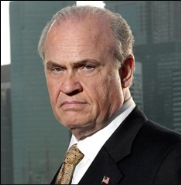
Best election night moment of tragic irony involving a washed up Tennessee politico: A commercial break during on-air election night coverage that puts us face to face with Fred Thompson doing his ad pitch for reverse mortgages. Remember those halcyon days back in the fall of ’07 (or more accurately those halcyon 20 minutes) when Fred was the man of the moment for the GOP? You still the man, Fred.
A version of this post appears on the Nashville Scene‘s Pith in the Wind blog.
Winning and Losing, Especially Losing
Posted: November 5, 2012 Filed under: Politics 1 Comment One day to go, a day when everyone thinks they’re winning, so let’s talk losing.
If Romney loses, the GOP’s internal post-election kerfuffle will be fascinating to watch. Is losing two in a row to a guy you frame as a proto-socialist Kenyan enough to get through to the faithful that a gay-baiting immigrant-hating anti-science white people’s party is just not going to fly long term as a vehicle for national political influence? Or will they just rationalize: Romney’s conservatism wasn’t the genuine article, or it was Hurricane SandyChristie’s fault. Are we doomed to enduring another four years of Tea Party obstructionism in Washington, and in 2016 another GOP primary cycle of red-meat penis size competition? Or will a close Romney loss send the signal that the moderate Mittbot was the solution, not the problem — the fatal flaw in 2012 being the hollowness and jejunity of the man rather than the concept?
If Obama loses, the internal shitstorm on the left will be far less clamorous — more of a pee sprinkle, really — since many Dems understood all along that Obama’s re-election prospects were always going to rise and fall with macroeconomic developments. While a drowsy economy has managed to shake itself half-awake with more good numbers than bad in the campaign’s final weeks, the larger narrative of economic lethargy never really dissipated. The overarching Obama problem has long been his unwillingness (and/or inability) as president to forcefully communicate his policies and priorities in ways that bring people aboard — healthcare reform being, of course, Exhibit A. A telling moment came a month ago following Obama’s calamitous evening in Denver, when he told supporters that Romney’s debate performance was “salesmanship” not leadership. A president who doesn’t see effective salesmanship as a key aspect of the job is a one-term president waiting to happen.
Divergence in recent weeks between national polls and battleground state polls has many wondering if we might be in for the magic split between popular vote and Electoral College outcome. The prognosticators are dubious— Sam Wang at Princeton makes it a 16-1 longshot — and Dems would obviously prefer the illusion of a governing mandate rooted in a consistent outcome on both fronts over a split decision. (I say Dems because it’s hard to fathom the split happening with a Romney win. The turnout wave that would help Romney overcome his conspicuous battleground state polling disadvantage would surely carry the popular vote with it.)
But I count myself among those who say mandate schmandate: If we are ever going to get rid of this senseless anachronism we call the Electoral College, it is probably necessary for Republicans to feel its emotionally piercing sting as Democrats did in 2000. Only then we can experience the dawn of true bipartisanship: that gleaming glorious day when the two parties with their gridlock are unable to save the country from its economic doom, but can go hurtling over the fiscal cliff hand in hand knowing that the Electoral College is soaring with them to its long overdue demise. Now that’s winning!
A version of this post appears on the Nashville Scene‘s Pith in the Wind blog.
Heading Into the Final Weekend…
Posted: November 2, 2012 Filed under: Politics Leave a comment Seven observations as we hit the pre-election weekend, on the other side of which looms … madness?
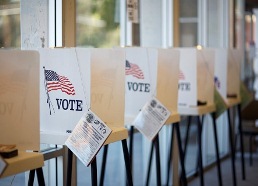
[1] A clear difference. You can spin the year’s battles over voter ID, early voting and voting rights in general in numerous ways, and we can expect plenty of litigation on this after the election. There is an inescapable truth, however, that overlays the entire matter: The country has one political party trying to make it possible for more people to vote, and one party doing all it can to see to it that fewer people vote.
[2] Still no reason to freak out. Last weekend I counseled Obamaphiles to keep their freakout impulses in check because “polls in the aggregate are actually painting a quite consistent picture, one that favors Obama in almost all the important battlegrounds.” Well now, a week later, nothing significant has changed on the polling front, except perhaps some slight movement in Obama’s direction (but slight). Core observations from polling remain: In Ohio, of the 25 polls going back to October 7, Obama has led in 19 of them, Romney in 2, and 4 have shown a tie; Romney has led in just one of the most recent 10 polls there. In New Hampshire Obama has led in all five polls completed since the final debate. In Wisconsin Romney hasn’t led in a poll since mid-August. The story in Iowa is a bit less convincing, and clearly Virginia and Colorado are dodgy, but Obama’s path to 270 remains reasonably unhampered.
[3] Reality is overrated. Mitt Romney’s quick response to this morning’s generally upbeat November jobs report was to call it “a sad reminder that the economy is at a virtual standstill.” It’s predictable that he would try to spin it toward the GOP narrative of a persistently weak economy and failed Obama presidency. But what’s fascinating (in a stupefying sort of way) is that by issuing such an emphatic and unqualified denunciation, Romney reveals himself yet again — one more time before the election, with feeling! — to be the man who will say anything no matter how obviously divorced from the reality staring him and his followers in the face. Romney’s campaign spent the better part of last week fending off collective astonishment at his truth-defying assertions regarding Jeep production in Ohio and China. Now will his surrogates have to spend the final weekend of the campaign walking back an absurdly categorical dismissal of economic recovery? I’m not sure anyone has summed up the Romney campaign as efficiently as The Economist did today in its Obama endorsement: “There are a lot of Romneys and they have committed themselves to a lot of dangerous things.”
 [4] Polling may never be the same. The endgame in this year’s election cycle is somewhat remarkable for the stark differences in interpretation of what the polls mean. Naturally it’s in the interest of the side doing less well in the polls to harp on methodology as a way to craft an impending victory narrative, so some of this is mere ritual. But reports indicate it’s not just the spin that diverges across party lines; there are also said to be meaningful differences between the parties’ internal polls. Between expansions of early voting and the challenges of polling in the age of disappearing landlines, the whole science of building likely voter models is being fundamentally tested. Reid Wilson at NJ Hotline sums it up:
Regardless of the cause, strategists on both sides acknowledge the difference in their internal polling. Republicans believe Democrats are counting far too much on low-propensity voters and a booming minority turnout that isn’t going to materialize on Election Day. Democrats believe Republicans are hopelessly reliant on an electorate that looks far more like their party than the nation as a whole. The day after Election Day, somebody’s pollsters are going to be proven seriously wrong.
There is, in particular, a fascinating debate (fascinating for the wonkiest of pollgazers, anyway) about what to make of “independents” and how they break in polls. In several surveys Romney whups Obama but good among independents, and this leads some on the right to insist that there’s no way the dude can be winning independents but losing the race. The reply from the left is that independents are just “people who used to be Republicans,” folks disaffected by the rise of the Tea Party who now tell pollsters they are independent, so of course they break red. The retort from the right is that if this were the explanation then over longer periods of time we should see an inverse relationship between party ID and independent support: “you’d expect to see Republicans doing better with independents when GOP turnout is low, and Democrats doing better with independents when Democratic turnout is low.” We’ll have a much better idea next Wednesday which theory has legs.
[5] Partisan gridlock will always be the same. The Romney/Ryan closing argument is rooted in part on assertions that they can succeed at bipartisanship where Obama has failed:
Romney: “You know that if the president is reelected he will still be unable to work with the people in Congress. I mean, he has ignored them. He has attacked them. He has blamed them. I won’t just represent one party, I’ll represent one nation.”
Ryan: “Republicans and Democrats can come together to solve this country’s problems. And we have a proven record for actually doing that. Mitt Romney did that that as governor, and I have been doing that in the House.”
It’s fair to say that Obama has at times shown he isn’t all that good at this aspect of the job. But the claim that Romney pulled it off in Massachusetts hardly passes the smell test since he got things done with a Democratic legislature when he was willing to act like a moderate Democrat; the rest of the time he was vetoing hundreds of bills. And seriously, folks, a claim by a current House GOP leader that “I have been doing that”? In what universe can the current House Republican caucus be said to have acted in a bipartisan fashion? However it goes next Wednesday, we will still have dysfunctionally divided government.
 [6] It never ends. Ready to take a break from electoral politics after next Tuesday? Fuhgetaboutit. It looks more likely than not that Dems will hold their Senate majority, but as Shane Goldmacher writes at National Journal, the landscape for Dems in Senate races in 2014 is even more treacherous. Democrats will again be defending more seats than Republicans (20-13), with incumbents in Arkansas, Louisiana, and North Carolina inherently vulnerable to conservative challenges. Factor in some possible Dem retirements in North Dakota and West Virginia. Yikes.
[7] Is this a great electoral system or what? Recounts and lawsuits aside, by this time next week we will know who is the next leader of the free world, by which of course I mean the President of the United Counties of Ohio. However this turns out, even if the candidate I prefer wins the Electoral College and loses the popular vote, the fact remains: In a contest to name the worst idea hatched by western civilization, it’s a dead heat between the Electoral College and mayonnaise.
A version of this post appears on the Nashville Scene‘s Pith in the Wind blog.


 BruceBarry.net