
No-Budget-No-Pay: Cooper v. Constitution
Posted: January 21, 2013 Filed under: Politics Leave a comment When U.S. House Republicans used their Williamsburg retreat last week to retreat from an economic hostage-taking strategy and allow a three-month rise in the debt limit, they adopted a version of Democratic Rep. Jim Cooper’s “no budget no pay” scheme as an element of their new strategy. Republicans plan to include in the debt ceiling bill a provision that withholds pay from members if their chamber of the Congress fails to pass a budget by April 15.
Cooper first introduced no-budget-no-pay in late 2011 as a bill that would dock members’ pay for each day past Sept. 30 (the end of the fiscal year) that they fail to pass budget and spending bills. Lamar Alexander and Bob Corker have co-sponsored a similar measure in the Senate. But Cooper isn’t so thrilled (outwardly, anyway) to see his idea co-opted in this very public way by House Republicans. “I am sorry that it is being used now as a political weapon,” he said late last week, adding that a rise in the debt limit “should be longer than 3 months and unconditional.”
The idea may be, as Cooper has suggested, a novel and potentially effective way for Congress to take responsibility for its own bad behavior. But is it a constitutional one? With no-budget-no-pay suddenly elevated from quixotic notion to serious negotiating gambit, questions are being raised about whether it runs afoul of the 27th Amendment, which reads (in its entirety):
No law, varying the compensation for the services of the Senators and Representatives, shall take effect, until an election of Representatives shall have intervened.
Simply put, a Congress (that is, the sitting body for a given Congressional session) cannot alter its own pay. Does withholding pay amount to “varying the compensation” of members of Congress? Talking Points Memo put this question to UCLA constitutional law professor Adam Winkler, who believes it does indeed:
The answer is unclear because the 27th Amendment has never been authoritatively interpreted by the Supreme Court. Yet it seems almost certainly unconstitutional. Withholding pay effectively “var[ies] the compensation” of lawmakers. The amendment doesn’t say only raises in pay are invalid. It refers to “varying the compensation.” Just as a “bonus” would vary lawmakers’ compensation, so does withholding money. This logic applies even if the pay is ultimately delivered to lawmakers. By outlawing “varying the compensation,” the 27th Amendment prohibits laws that change when lawmakers receive pay, not just the amount they receive.
TPM quotes a House GOP leadership aide defending its constitutionality with an appeal to semantics: “The legislation does not change members’ pay. It does not reduce it.” The truth of that assertion may depend on how the thing is written. In Cooper’s original no-budget-no-pay measure (HR 3643 introduced December 2011), Congressional pay withheld could not be recouped retroactively.
So with House Republicans desperate for a way to put some fiscal heat on Senate Democrats, no-budget-no-pay may finally be poised to have its day in the sun. Alas, it may first need to have its day in court.
A version of this post appears on the Nashville Scene‘s Pith in the Wind blog.
Republicans, Guns, and Latinos
Posted: December 19, 2012 Filed under: Politics Leave a comment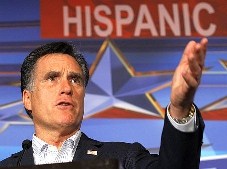 Since last month’s election, many in the GOP have been puzzling their way through the party’s Hispanic nightmare in electoral politics, trying to find a way to reverse President Barack Obama’s overwhelming 40-plus percentage-point landslide among the Latino vote. Now, in the wake of awful circumstances in Connecticut, comes a new surge of interest in gun control as public policy. Republicans, already working overtime to master new political tap dance routines that will avoid offending their gun lobby overlords, now get to confront this charming piece of the puzzle: Latinos love gun control!
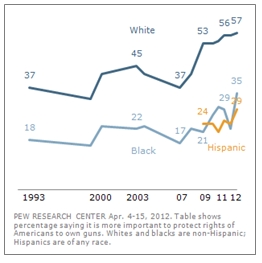
As Adam Winkler summarizes in a Daily Beast piece this morning, polls consistently show that more and better regulation of firearms is an issue of some importance to the Hispanic electorate. A Pew Research Center poll earlier this year asked whether it’s more important to protect the rights of American to own guns or more important to control gun ownership. As the chart illustrates, Hispanic respondents were far less likely than whites (and even a bit less likely than blacks) to endorse gun rights as more important than gun control.
 Another survey, conducted last last year by Lake Research Partners for the bipartisan group Mayors Against Illegal Guns, found that a whopping 69 percent of Latino voters want stronger laws governing gun sales, with fewer than a quarter preferring the status quo. More than 85 percent of Latinos in the survey want criminal background checks required for all gun buyers.
With Republicans also finding themselves in the 2012 election on the wrong end of a pretty significant gender gap, it is worth mentioning (even if it goes without saying) that women also favor more regulation of guns over expanded gun rights — by a margin over more than 20 percentage points in the Pew survey.
While there is nothing amusing about the circumstances that have propelled firearms back into the public policy limelight, it will be somewhat diverting to see how the GOP evolves and arranges its Latino/NRA simulpander.
A version of this post appears on the Nashville Scene‘s Pith in the Wind blog.
The Disability of Moderation II
Posted: December 17, 2012 Filed under: Politics Leave a comment I recently mentioned that Sen. Bob Corker’s supposedly moderate impulses failed to stop him from joining the unhinged right in opposition to an international treaty protecting the rights of people with disabilities. Now, in the wake of the Newtown, Conn. horror, Corker finds himself in bed with the gun loving right and its patron saint, the gun lobby.
As was widely reported over the weekend, NBC’s Meet the Press reached out to all 31 pro-gun-rights senators to invite them to share their views on the Sunday morning show, with (quoting the show’s producer) “no takers.” Bob Schieffer of CBS’s Face the Nation indicated that he, too, could find no Republicans to come on air to talk about gun control.
Corker is a member in good standing of this group of suddenly very camera shy gun-happy lawmakers. A glance at Federal Election Commission campaign finance disclosure data reveals Corker to be one of seven Republican Senate candidates on the receiving end of National Rifle Association dollars ($4,950 to be exact) during the 2012 election cycle. Our other faux moderate senator, Lamar Alexander, cheerfully accepted $9,900 of NRA largessse during the 2008 cycle. (Among Tennessee’s U.S. House members, no Democratic legislators received NRA support during the 2012 cycle, but Reps. Lincoln Davis and Bart Gordon both received NRA contributions in 2010.)
To recap, the Tennessee definition of a moderate: Advance the NRA’s agenda while opposing fair treatment of people with disabilities.
A version of this post appears on the Nashville Scene‘s Pith in the Wind blog.
Is Moderation a Disability?
Posted: December 7, 2012 Filed under: Politics Leave a comment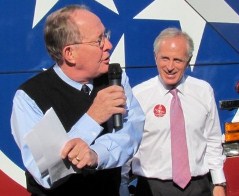 In the sea of deep angry red that is Tennessee politics these days, a desperate thirst for moderation continues to distort coverage of some of our elected representatives. And so it is that The Tennessean paints positions taken by Sens. Bob Corker and Lamar Alexander on fiscal cliff negotiations as striking a more flexible pose than some of their GOP brethren:
While other Middle Tennessee Republicans in Congress expressly oppose raising tax rates as part of any solution to the looming “fiscal cliff,” the state’s two GOP senators appear to be leaving negotiating room. When asked specifically this week if they would rule out increasing tax rates for those making $250,000 and above — rather than just modifying deductions and exemptions — Sens. Lamar Alexander and Bob Corker stopped short of such a declaration.
Alexander says he’s “waiting for the president to do his job, which is to recommend a specific plan to restrain entitlement spending.” Corker echoes: “Until the discussion moves to entitlement reform, especially Medicare, it’s not a serious conversation.”
Earth to Bob and Lamar: Insisting that significant entitlement reform accompany the fiscal adjustments needed to avert the so-called cliff isn’t reasonable or moderate; it’s an alternative route to the great state of delusion. With just three and a half pre-cliff weeks on the calendar, the labyrinthine policy webs of Medicare and Medicaid are not going to be seriously pondered, much less reformed. The cliff is an unsavory and ill-advised combination of mandatory tax hikes and spending cuts, and the 24-day solution is to adjust tax hikes and spending cuts. Making high-minded but utterly meaningless demands for broad entitlement reform, as Corker and Alexander are, is no less a form of taxpayer hostage-taking than the rabid refusal of their mouth-foamier GOP colleagues who refuse to even consider letting Obama fulfill his campaign promise to raise top marginal rates.
Alexander and Corker did have a chance to show off some genuine moderation earlier in the week when the Senate failed to ratify an international treaty protecting the rights of people with disabilities. Eight Republicans found the microscopic quantity of backbone necessary to defy their right-wing overlords and cast a vote in favor of ratification. Alexander and Corker both voted against. In a stunning display of conviction, Roll Call reported, Alexander “would not say whether he supported the treaty, merely noting that the timing of the vote was bad.”
Moderation is one thing, sedation entirely another.
A version of this post appears on the Nashville Scene‘s Pith in the Wind blog.
Play the GOP Blame Game
Posted: November 15, 2012 Filed under: Politics Leave a commentWith the election now more than a week in the rear-view mirror, the unhinged voices of GOP apocalypse (none more paroxysmic than this one) that dominated in the first few days have given way to more sober post-mortems offered up by allegedly rational adults. Let’s take a look.
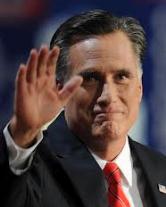 First up is Mitt Romney, who on a conference call with donors and fund-raisers Wednesday blamed his defeat on Barack Obama’s inclination for bestowing policy “gifts” on key constituencies:
With regards to the young people, for instance, a forgiveness of college loan interest was a big gift. Free contraceptives were very big with young, college-aged women. And then, finally, Obamacare also made a difference for them, because as you know, anybody now 26 years of age and younger was now going to be part of their parents’ plan, and that was a big gift to young people. They turned out in large numbers, a larger share in this election even than in 2008 ….You can imagine for somebody making $25,000 or $30,000 or $35,000 a year, being told you’re now going to get free health care, particularly if you don’t have it, getting free health care worth, what, $10,000 per family, in perpetuity — I mean, this is huge …. Likewise with Hispanic voters, free health care was a big plus.
Mostly what this illustrates is that the Mitt Romney who failed to win office is just as clueless and self-unaware as the Mitt Romney who ran for office. (Several Republicans apparently agree.) Public policies that people perceive make their lives better are “big gifts”? Does he really think that single women concerned with issues of health and family planning went blue for contraceptive freebies rather than because Mitt and company vowed to defund Planned Parenthood and give employers control of contraceptive options in health care? Is he really under the illusion that making health insurance more accessible for tens of millions of uninsured Americans is the moral or economic equivalent of giving people a gift of “free health care … in perpetuity”?
 Next up is Paul Ryan, who earlier this week blamed it on cities: “The surprise was some of the turnout, some of the turnout especially in urban areas, which gave President Obama the big margin to win this race.”
Translation: “Black and brown people voted. What the hell?” Dude, you lost Iowa.
Lastly there’s “the architect,” Karl Rove (and you can’t spell architect without “arch”). Did you know that Rove’s birthday is Dec. 25 and his middle name is Christian? Be that as it may, in an op-ed in today’s Wall Street Journal Rove fires up some post-game pablum:
Strategically, Republicans will need to frame economic issues to better resonate with middle-class families. Mr. Romney had solid views on jobs, spending, deficits, health care and energy. But even among the 59% of voters for whom the economy was their top concern, he prevailed by only four points …. One reason the GOP didn’t do better with its pro-growth agenda was that Mr. Romney’s character and record were undermined by early, relentless personal attacks that went largely unanswered.
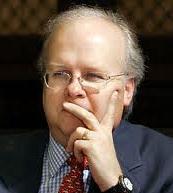 Yeah, that’s right, Karl, it was all a matter of framing; an economic plan built on fantasy arithmetic, an approach to health insurance that celebrates the magic of primary care in emergency rooms, and an energy strategy built on oil and coal forever had nothing to do with it.
Republicans need not jettison their principles. But they must avoid appearing judgmental and callous on social issues. Offensive comments about rape by GOP Senate candidates in Missouri and Indiana gave the media an excuse to put social issues at the election’s center in a way that badly hurt the entire party, as well as costing Republicans two Senate seats.
The problem is not that a few offensive comments gave the media an excuse to put these issues front and center; it’s that Romney and Ryan wouldn’t and couldn’t successfully distance themselves and their party from this callousness. It wasn’t some rogue rape-obsessed Senate candidate who was dumb enough to define workplace gender equality as making sure women can get home early and cook dinner.
The GOP must reduce the destructiveness of the presidential primaries. In the first place, activists can withhold support from candidates who make reckless assaults on competitors, which happened too often this time. Also, the Republican National Committee should limit the number of debates and, by showing wisdom in picking debate moderators, limit the media’s ability to depict the party as a fringe group.
Yes, when all else fails, blame the media. Hate to break it to you, Karl, but the GOP made itself look like a fringe group all by itself; the press merely reported the story that we all saw unfolding. Given the rhetorical mood and tenor of the primary season “talent” on offer, fewer debates wouldn’t have suppressed the crazy, they just would have evinced it more quickly and efficiently.
A version of this post appears on the Nashville Scene‘s Pith in the Wind blog.
The Morning After
Posted: November 7, 2012 Filed under: Politics Leave a comment On the morning after, checking in with the commentariat and giving credit where credit is due…
Best one sentence summing up of how the GOP’s extremist war on reason has tarnished the Republican brand (Conor Friedersdorf at The Atlantic): “I see a coalition that has lost all perspective, partly because there’s no cost to broadcasting or publishing inane bullshit.”
Most grandiose big-picture election outcome freakout (By David Gelernter at National Review): “The blue states want to secede not from America but from Americanism. They reject the American republic of God-fearing individuals in favor of the European ideal, which has only been government by aristocracy: either an aristocracy of birth or, nowadays, of ruling know-it-alls — of post-religious, globalist intellectuals.”
Best right-wing use of a literary device to prop up a hallucination that Romney was in position to win had the the storm not pelted the northeast last week (Scott Johnson at Power Line: “Hurricane Sandy weirdly proved to be something like a deux ex machina for Obama.”
Most compelling counterfactual (Michael Hammond at Red State): The GOP lost because “They allowed Democrats to pick their nominee for them,” which meant a ticket headed by a “liberal stand-for-nothing Republican” instead of alternatives like “Sarah Palin, Michele Bachmann, Rick Santorum, Newt Gingrich” who are “bright, attractive, and have compelling narratives.”
Most candid admission of defeat on the right (Maggie Gallagher of the National Organization for Marriage, on the string of stunning wins last night for marriage equality): “Last night really is a big loss, no way to spin it.” (See also Dick Morris, whose post-hoc explanation for his patently absurd pre-election forecast is idiotic, but who at least doesn’t sugar coat the palpability of the miss.)
Best post-election illustration that conservatives are going to have to transcend denial and think a little harder about how their approach to contraception, reproductive rights, Planned Parenthood, and all the rest is perceived by huge swatchs of the electorate (Kathryn Jean Lopez at National Review): “The ‘war on women’ nonsense is among what weighs on me most here. How insulting. And it worked?!”
Best gravity-defying post-election headline (at the Washington Examiner): Obama’s victory is a victory for Karl Rove. (It turns out that writer Philip Klein’s piece under that hed makes a somewhat valid point.)
 Most apocalypic fulmination in response to a close election (commenter on Michelle Malkin’s blog): “America is a memory now. The freaks have won. The freaks and perverts and demons rule the country. Obama is the anti-Christ, and unless the Rapture comes tomorrow, all is lost.”
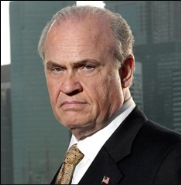
Best election night moment of tragic irony involving a washed up Tennessee politico: A commercial break during on-air election night coverage that puts us face to face with Fred Thompson doing his ad pitch for reverse mortgages. Remember those halcyon days back in the fall of ’07 (or more accurately those halcyon 20 minutes) when Fred was the man of the moment for the GOP? You still the man, Fred.
A version of this post appears on the Nashville Scene‘s Pith in the Wind blog.
Winning and Losing, Especially Losing
Posted: November 5, 2012 Filed under: Politics 1 Comment One day to go, a day when everyone thinks they’re winning, so let’s talk losing.
If Romney loses, the GOP’s internal post-election kerfuffle will be fascinating to watch. Is losing two in a row to a guy you frame as a proto-socialist Kenyan enough to get through to the faithful that a gay-baiting immigrant-hating anti-science white people’s party is just not going to fly long term as a vehicle for national political influence? Or will they just rationalize: Romney’s conservatism wasn’t the genuine article, or it was Hurricane SandyChristie’s fault. Are we doomed to enduring another four years of Tea Party obstructionism in Washington, and in 2016 another GOP primary cycle of red-meat penis size competition? Or will a close Romney loss send the signal that the moderate Mittbot was the solution, not the problem — the fatal flaw in 2012 being the hollowness and jejunity of the man rather than the concept?
If Obama loses, the internal shitstorm on the left will be far less clamorous — more of a pee sprinkle, really — since many Dems understood all along that Obama’s re-election prospects were always going to rise and fall with macroeconomic developments. While a drowsy economy has managed to shake itself half-awake with more good numbers than bad in the campaign’s final weeks, the larger narrative of economic lethargy never really dissipated. The overarching Obama problem has long been his unwillingness (and/or inability) as president to forcefully communicate his policies and priorities in ways that bring people aboard — healthcare reform being, of course, Exhibit A. A telling moment came a month ago following Obama’s calamitous evening in Denver, when he told supporters that Romney’s debate performance was “salesmanship” not leadership. A president who doesn’t see effective salesmanship as a key aspect of the job is a one-term president waiting to happen.
Divergence in recent weeks between national polls and battleground state polls has many wondering if we might be in for the magic split between popular vote and Electoral College outcome. The prognosticators are dubious— Sam Wang at Princeton makes it a 16-1 longshot — and Dems would obviously prefer the illusion of a governing mandate rooted in a consistent outcome on both fronts over a split decision. (I say Dems because it’s hard to fathom the split happening with a Romney win. The turnout wave that would help Romney overcome his conspicuous battleground state polling disadvantage would surely carry the popular vote with it.)
But I count myself among those who say mandate schmandate: If we are ever going to get rid of this senseless anachronism we call the Electoral College, it is probably necessary for Republicans to feel its emotionally piercing sting as Democrats did in 2000. Only then we can experience the dawn of true bipartisanship: that gleaming glorious day when the two parties with their gridlock are unable to save the country from its economic doom, but can go hurtling over the fiscal cliff hand in hand knowing that the Electoral College is soaring with them to its long overdue demise. Now that’s winning!
A version of this post appears on the Nashville Scene‘s Pith in the Wind blog.


 BruceBarry.net